
What Happens on Grand Performance Day? A Parent’s Guide to Your Child’s Big Night

For many parents, the grand performance at the end of a theatre workshop is the first time they truly see the transformation their child has undergone. This article walks you through what to expect on performance day, how to prepare, and why this single evening matters more than you might think.
Before the Show: What Happens Backstage
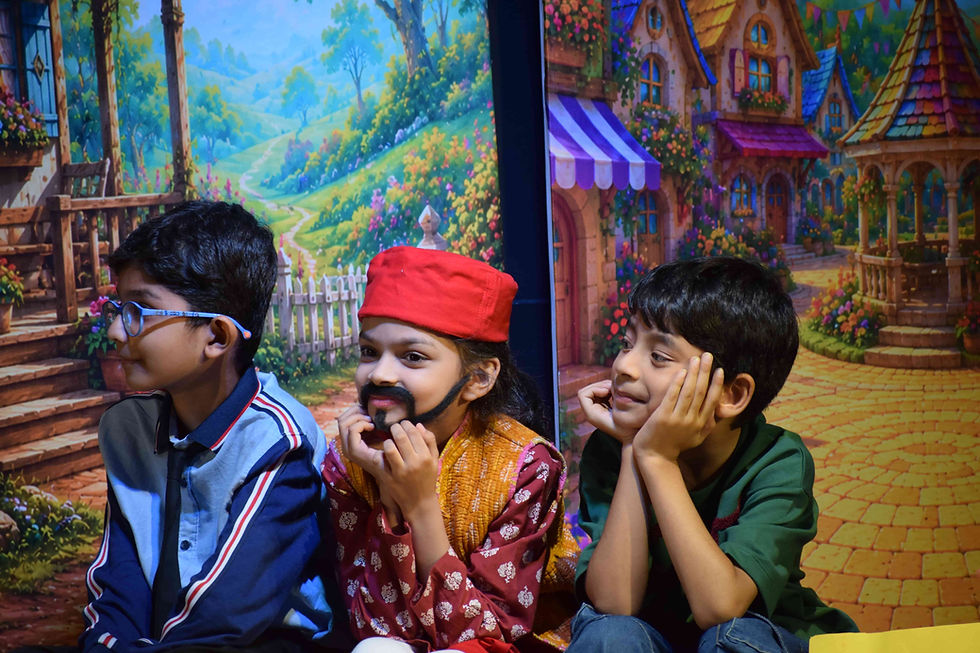
On performance day, children arrive early. There is a buzz of nervous energy that is completely normal and actually desirable. Children change into their costumes, help each other with props, and run through their lines one final time. As a director, this is when I see the strongest evidence of growth. Children who could not make eye contact in session 1 are now coaching their peers on dialogue delivery. The shy ones are calming the nervous ones. A community has formed over 30 sessions and it is visible in these backstage moments.
The Performance Itself
This is not a school assembly. It is a full theatre production with stage lights, proper sound, costumes, props, and a real audience. The production typically runs 30 to 45 minutes. Every child is on stage with lines, movement, and purpose. There will be moments that surprise you. A child who you think of as quiet will deliver a line with authority. A child who is usually restless will hold a dramatic pause perfectly. These moments are not accidents. They are the result of 30 sessions of structured training.
The Curtain Call
When the play ends and the children take their bow, the audience reaction is always the same: disbelief. Parents who dropped off a shy, hesitant child three months ago are watching that same child bow confidently to a standing audience. This is the moment that makes everything worthwhile. Not just for the child but for the parent. Many parents tell me this is when they truly understand what theatre does.
What Parents Should Do on Performance Day
Arrive on time. Sit where your child can see you in the audience if possible. Put your phone on silent but do record the performance if you wish. After the show, resist the urge to critique. Do not say things like you forgot your line in the second scene. Instead say something like I could see how much you enjoyed being on stage or you were so confident up there. Celebrate the effort and the courage, not the perfection.
Bring the Extended Family
Grandparents, uncles, aunts, cousins. The bigger the audience, the bigger the achievement feels for your child. When a child performs in front of their extended family, the pride they feel is enormous. It validates months of hard work and reinforces their confidence in a way that nothing else can. An audience of 10 feels different from an audience of 100. Help us make it 100.
After the Show: What Happens Next
The high of performance day lasts for weeks. Children walk taller, speak more clearly, and carry themselves with a new kind of self-assurance. Teachers often notice the change when school resumes. The child who performed on stage in June walks into the July classroom as a different person. This is not an exaggeration. Over 20 workshop cycles and 900 children, I have seen this pattern consistently.
The next grand performance is on 21st June 2026. But the journey starts on 4th April. 30 sessions of structured theatre training at Shastri Nagar, Ghaziabad. For Grades 3+ and 7+. Every child performs.
WhatsApp 9910166111 | Register: https://forms.gle/2PFMD5igSEDx2u6u8 | www.prathampath.com
— Sudhir Rana, Founder & Theatre Director, Pratham Path Theatre


Comments