
How Theatre Helps Children Who Struggle with Public Speaking and Presentations

Every parent knows the moment. Your child has a presentation at school. They know the material. They have practised at home. But when they stand in front of the class, their voice drops, their hands shake, and they rush through it staring at the floor. Public speaking anxiety is one of the most common challenges children face and it does not go away on its own. Theatre is one of the most effective ways to address it.
Why Children Struggle with Public Speaking
The core issue is not knowledge or preparation. It is the fear of being watched and judged. When a child stands alone in front of a group, they feel exposed. Every eye is on them. Every mistake feels enormous. This fear triggers a physical stress response: shallow breathing, tense muscles, shaky voice, racing heart. No amount of telling a child to relax or be confident will override this biological response. They need a structured environment where they gradually learn to be comfortable being watched.
How Theatre Rewires the Fear
In a theatre workshop, children are never suddenly put in the spotlight. The first weeks are group activities where everyone participates together. Nobody is singled out. Then gradually, activities shift to smaller groups, then pairs, then individual moments within scenes. By the time a child speaks a line alone on stage, they have spent weeks building comfort in progressively more exposed situations. The fear is not eliminated overnight. It is systematically reduced over 30 sessions until it no longer controls them.
Voice Projection Changes Everything
One of the first skills theatre teaches is voice projection. Children learn to speak from their diaphragm, to fill a room with their voice without shouting. They learn to articulate clearly and to use pace and pauses for effect. These are the exact skills that make the difference between a mumbled school presentation and a confident one. Once a child discovers they can make their voice reach the back of a room, something shifts inside them. They realise they have the power to be heard.
The Safety of a Character
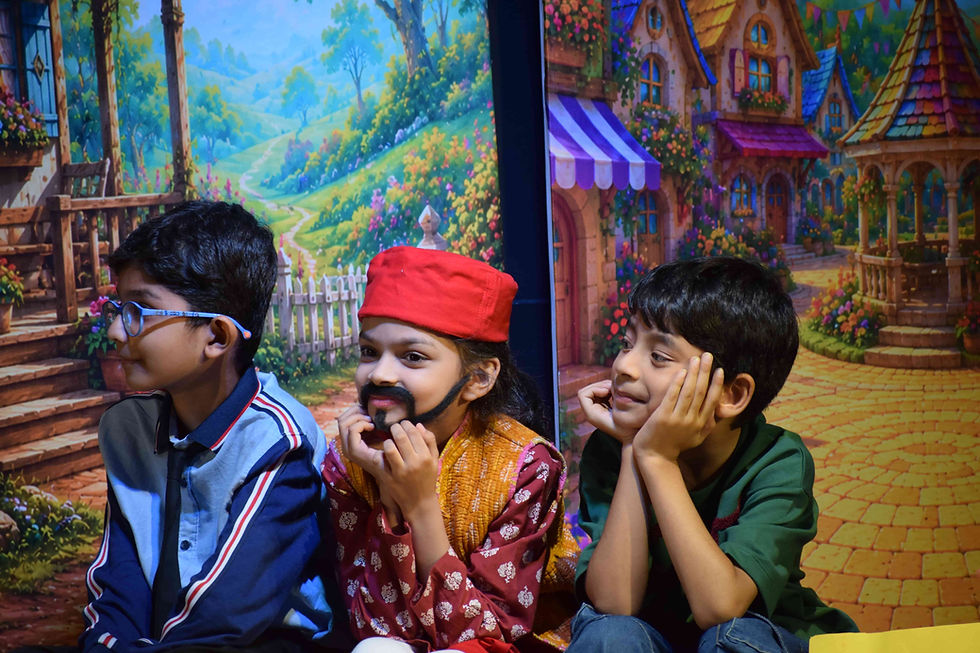
Here is something most people do not understand about theatre. When a child performs as a character, they are not speaking as themselves. They are speaking as someone else. This creates a psychological safety net. A shy child who cannot speak up as themselves can deliver a king’s decree with authority because they are not being themselves. They are playing a role. Over time, the confidence they build while playing characters transfers to their real personality. They discover that the strong voice they used on stage is actually their own voice. They just needed a safe way to find it.
From Stage to Classroom
Parents consistently report that the biggest visible change after a theatre workshop is not on stage but in the classroom. Children who completed our programme start volunteering for presentations. They answer questions in class without prompting. They speak up in group discussions. They make eye contact with teachers and peers. The stage gave them the skills. The classroom is where they use them every day.
If your child struggles with presentations, stage fear, or speaking in front of groups, a 30-session theatre workshop can transform that. Pratham Path Theatre’s next workshop starts 4th April 2026 in Ghaziabad. Grades 3+ and 7+. Every child performs. No prior experience needed.
WhatsApp 9910166111 | www.prathampath.com
— Sudhir Rana, Founder & Theatre Director, Pratham Path Theatre | 900+ children trained


Comments